Cancer doubles in 3 months...Protocols "sentence" cancer patients to death
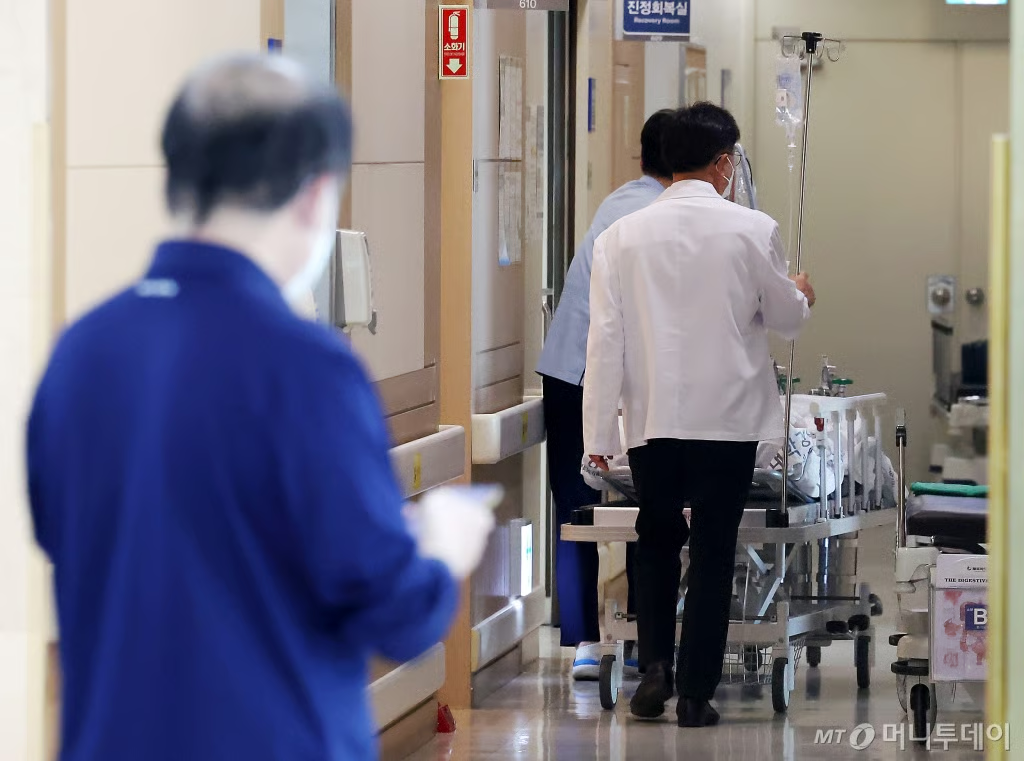
Although the government has decided to convene a Special Committee on Medical Reform, directly under the Office of the President, on the 25th to discuss medical reform, the medical community appears poised to boycott the meeting. Doctors, including those from the Korean Medical Association (KMA), are maintaining their stance that they will not participate in the dialogue unless one of the following conditions is met: △ A complete reevaluation of the plan to increase medical school enrollment △ the dismissal of the Minister and Vice Minister of Health and Welfare, and △ that only the government and the medical community should serve as dialogue partners. They are maintaining their stance that they will not participate in the talks unless at least one of these conditions is met. Furthermore, with professors at major university hospitals declaring a mass resignation on the 25th and the plan for a weekly one-day clinic shutdown set to take effect this week, there are concerns that patients with severe illnesses, such as cancer, will suffer the most.
In fact, for cancer patients, anticancer treatment is a matter of life and death, not just quality of life. Prognoses can vary significantly depending on whether or not they receive appropriate treatment in a timely manner. Unlike normal cells, cancer cells divide and proliferate indefinitely, growing at an excessively rapid rate. The metabolic process—from when cancer cells steal nutrients from normal cells to when they break them down for energy—is five times more vigorous than that of normal cells.
These cancer cells grow faster as the tumor mass increases. In the case of liver cancer, it takes 10 to 20 years for a tumor to grow to 5 mm, but it takes only 1 to 3 years to grow from 5 mm to 10 mm, 1 to 2 years to grow from 10 mm to 20 mm, and 3 to 12 months to grow from 20 mm to 40 mm—meaning the time required to double in size decreases.
In medicine, the primary goal of cancer treatment is defined as “extending the life of cancer patients and improving their quality of life.” Cancer treatment is divided into “adjuvant chemotherapy” and “palliative chemotherapy” depending on its purpose. Adjuvant chemotherapy is primarily intended for patients who have undergone cancer surgery (though it is sometimes administered before surgery). Even though the cancer has been surgically removed, microscopic cancer cells invisible to the naked eye may remain and grow, potentially leading to recurrence. Adjuvant chemotherapy eradicates these microscopic metastases, thereby lowering the recurrence rate and increasing the cure rate.
Palliative chemotherapy is administered to slow the progression of cancer and alleviate symptoms, thereby improving the quality of life for cancer patients. It is intended for patients whose cancer has metastasized to other parts of the body, making surgery no longer an option. This means that if such treatment is not received in a timely manner or is missed, the rate of recurrence and metastasis can accelerate significantly.
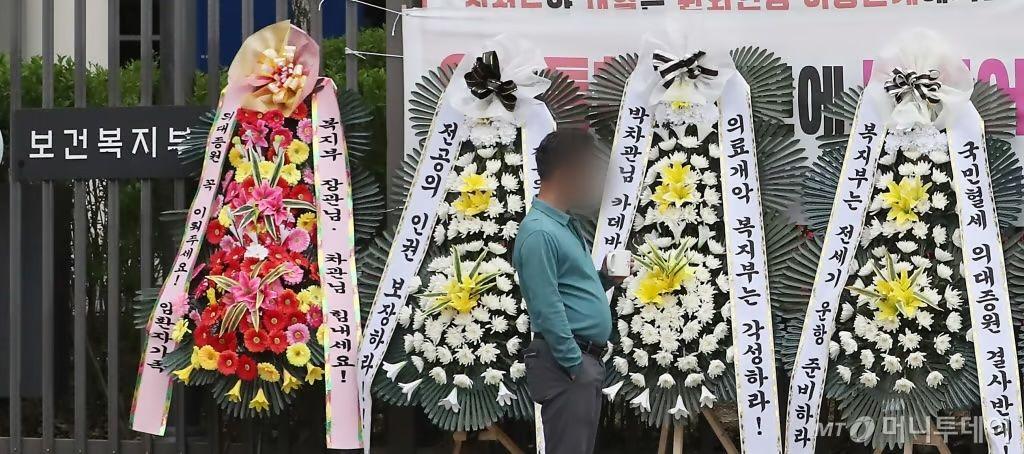
What happens if a cancer patient is unable to receive anticancer treatment (chemotherapy or radiation therapy) in a timely manner due to their primary physician resigning or a clinic shutdown? Doctors emphasize that the “golden window” is “3 to 6 months after the start of anticancer treatment.” Cho Seong-hoon, Director of the Eum Healthcare Center at Seoul Yes Hospital, stated, “Typically, the period during which we can assess the size of the tumor and the status of metastasis following immunotherapy, chemotherapy, or radiation therapy is 3 to 6 months after the start of treatment.” He added, “During this period, we observe and evaluate whether the patient responds to the treatment and how the cancer has changed to confirm its effectiveness.” "If cancer treatment is delayed or halted beyond the scheduled timeline, it means missing the window to assess its effectiveness," he said.
For this reason, cancer patients cried out to university hospital professors, saying, “This is a death sentence.” The Korea Cancer Patients’ Rights Council issued a statement on the 24th, stating, “Due to the current medical vacuum caused by the mass resignation of resident physicians and medical school professors for over two months, cancer patients and their families are already exhausted and overwhelmed by a sense of helplessness,” and urged the withdrawal of the policy to suspend medical services.
The council condemned the move, stating, “Even as surgeries, chemotherapy, and radiation treatments have been delayed or canceled, and even outpatient care has been delayed or postponed [since the medical crisis began], patients and their families have barely managed to hold on with superhuman patience.” They added, “In this situation, for tertiary hospitals to halt surgeries and outpatient care once a week is tantamount to sentencing cancer patients to death and crushing their will to fight the disease.”